Howdy!
I'm Racine Cleveland (she/her), a planetary scientist, educator, and science communicator. I am currently a Planetary Science Postdoctoral Research Fellow at Boise State University under the advisement of Dr. Brian Jackson in the Physics and Astronomy Department. I earned my PhD in Space and Planetary Science and MS in Geography from the University of Arkansas and my BS in Geography from Oklahoma State University. I am currently based in Boise, Idaho, but my roots are in Prague, Oklahoma.
My research explores the processes that shape planetary surfaces and atmospheres across Mars, Titan, and Earth. On Mars, I have used high-resolution HiRISE imagery to measure changes on the South Polar Residual Cap. On Titan, I have studied radar observations of dune fields and compared them with terrestrial analogs. My current research focuses on terrestrial and Martian dust devils, combining field observations, environmental sensor networks, and Mars 2020 mission data to investigate surface–atmosphere interactions.
Beyond research, I am active in scientific leadership, mentorship, teaching, and public outreach. I mentor undergraduate researchers, have taught and developed university-level courses, and have served in graduate and scientific leadership roles. I also regularly share astronomy and planetary science with the public through lectures, classroom visits, media interviews, and programs with IDAstro and Bruneau Dunes State Park Observatory.
Across my research, leadership, and outreach, I am interested in understanding dynamic planetary environments, supporting future exploration, and making space science accessible to a broader community.
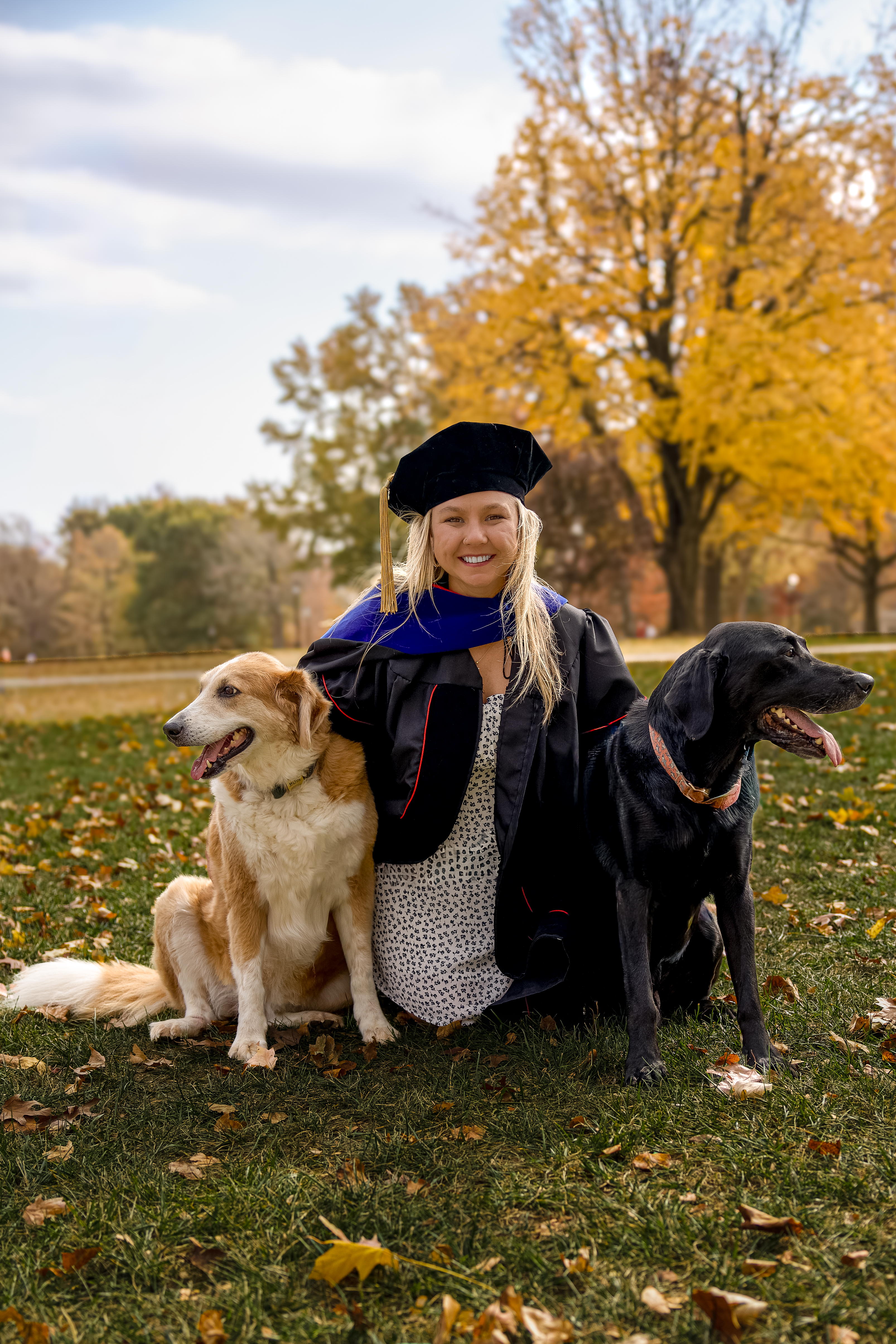
Fur babies: Heidi (Left) and Axell (Right).