2026
NASA’s Artemis II prepares for new era of human spaceflight
Listen To This SegmentIt's been more than 50 years since NASA sent astronauts toward the moon and the Artemis II mission is paving the way to put more humans into space. On April 1, the Orion spacecraft shot up into Earth orbit and began tests to make sure everything was ready for the April 2 engine burn which will take the four astronauts into lunar orbit.
Artemis II is all about testing everything from how Orion handles spaceflight to figuring out the next steps for humans to return to the moon and spread out to Mars.
Dr. Racine Cleveland was watching last night when Orion blasted off. She's a planetary science postdoctoral research fellow at Boise State University and she’s been studying Martian dust devils with Dr. Brian Jackson in Boise State's Physics Department.
She's a big Artemis enthusiast and she joined Idaho Matters to tell us about the mission! - Writting by Samantha Wright. Interviewed by Gemma Gaudette.
Cleveland earns Ph.D.
 Read This Article
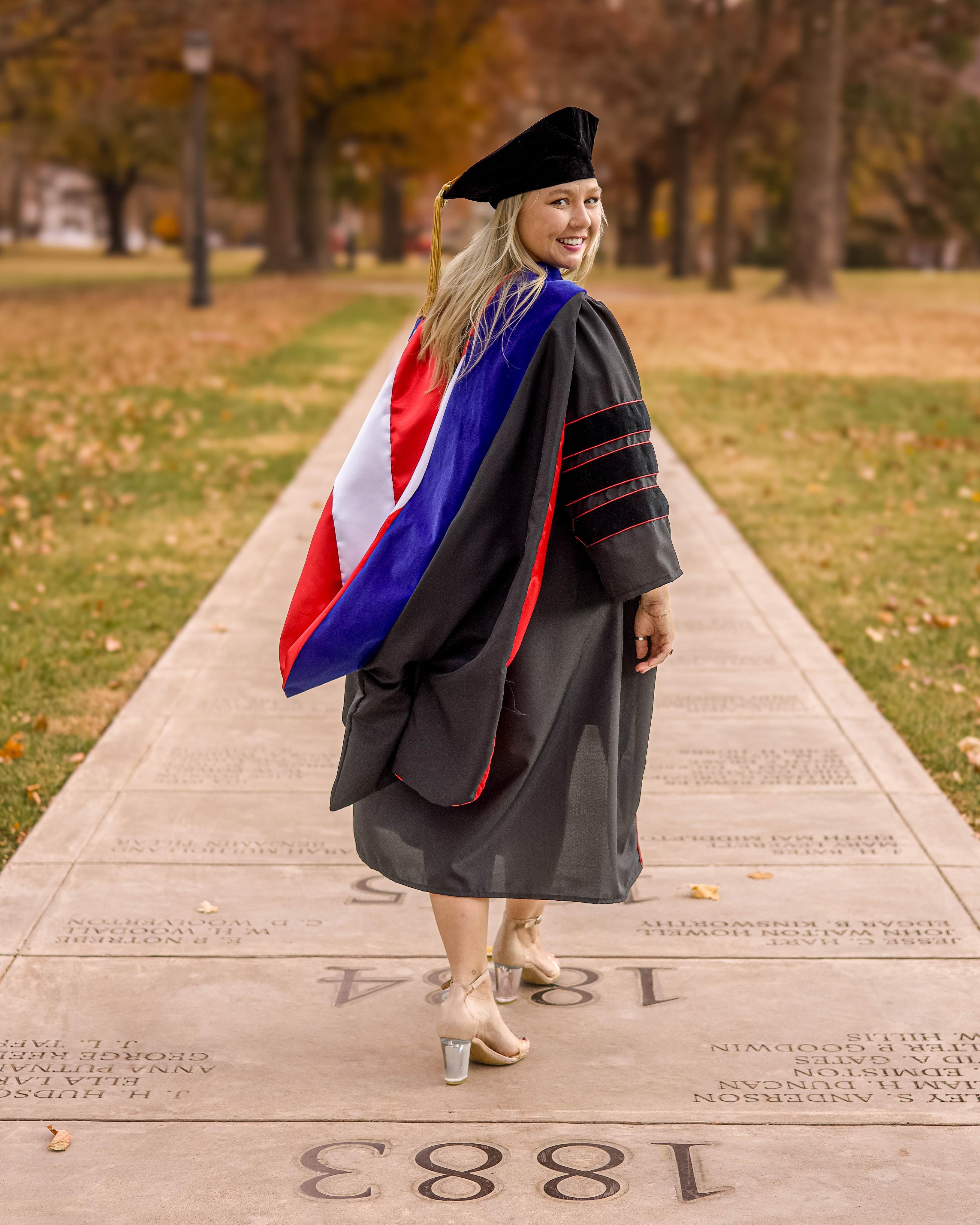
Racine Cleveland, a member of the Choctaw Nation of Oklahoma and a native of Prague, Oklahoma, has earned a doctoral degree from the University of Arkansas, becoming the first in her family to receive a Ph.D.
Cleveland previously earned a bachelor’s degree in geography from Oklahoma State University in 2019 and a master’s degree from the University of Arkansas in 2023. Throughout her college career, she received support from the Choctaw Nation Higher Education Program scholarship.
Her research focuses on planetary surfaces and atmospheres, using spacecraft imagery to study how landscapes reveal long-term atmospheric activity. Cleveland studies ice features at the south pole of Mars and sand dunes on Titan, which help scientists understand how wind, ice and climate shape planetary environments over time. During graduate school, Cleveland presented research at scientific conferences in Canada and Italy and conducted fieldwork in Namibia’s Namib Sand Sea, an Earth analog for Titan’s dunes.
Cleveland said her interest in space began when she looked through a telescope with her father as a child. She is also a descendant of Gilbert Wesley Duke, who served as chief of the Choctaw Nation from 1900 to 1902.
Her doctoral research was funded by NASA through the Research Opportunities in Space and Earth Sciences (ROSES) Program. She has published research on Mars and has additional work under review focusing on Titan.
Cleveland will next serve as a postdoctoral research fellow at Boise State University, where she will mentor undergraduate students studying planetary science and participate in outreach programs that bring telescope nights and space education to local schools.
She said she hopes to continue researching planetary science while encouraging young students to pursue careers in science
“I am proud to represent my Choctaw heritage, my hometown and my family,” Cleveland said. - Choctawn Nation of Oklahoma Biskinik April & May Edition 2026
2025
2024
Solar eclipse excites members of University of Arkansas program.
 Watch This Interview
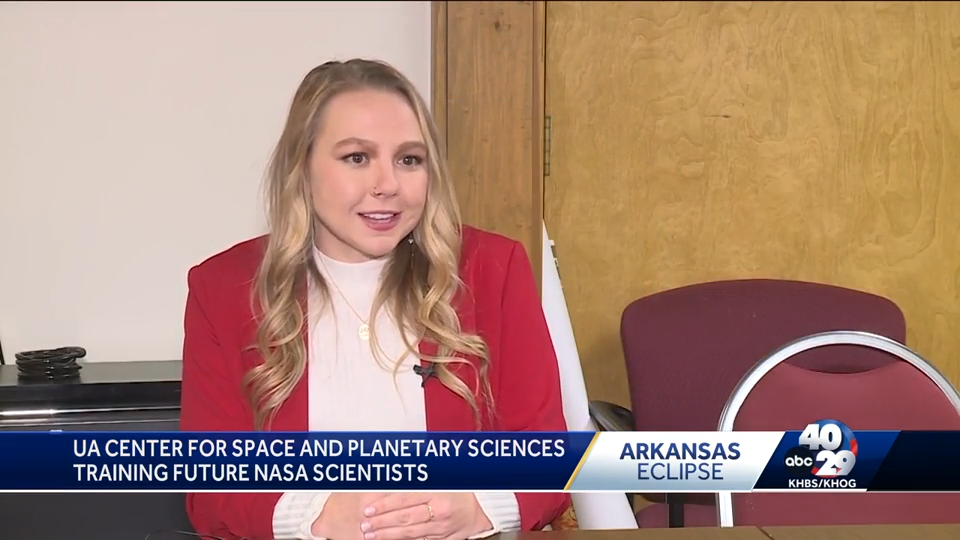
The April 8 solar eclipse will bring totality to parts of the Natural State, and members of a University of Arkansas program can't wait for it to happen.
"I think that, just in general, it's really exciting for people that are not scientists to get a glance into astronomy," said PhD candidate Racine Cleveland.
Cleveland is a student at the U of A's Center for Space and Planetary Sciences. She's trying to get a better understanding of carbon dioxide levels on Mars. She said there is a lot of free data from NASA on the internet, but not enough people look at the data on Mars. "I am taking the images," she said, "I'm taking those pictures that we've taken and getting science out of them. Getting something substantial that could, in turn, lead to understanding of the atmosphere."
Officials with the center said half of their graduates end up working for NASA either directly or indirectly. Some students might even develop missions for the organization at some point.
Cleveland said she hopes the April 8 eclipse will get more people into studying science. Other students agree, including fellow PhD candidate Shelby Osborne.
Osborne studies the beginning of life on Earth, and she said she plans to watch the eclipse with her family in Russellville. "I'm going to the tallest mountain," she said, "and I'm going to experience the highest percentage of the eclipse that can be seen in Arkansas."
Students with the center said they wanted people to go to STEM meetings if they are interested in becoming scientists. Some of the areas of research at the center include astrobiology, ice on Pluto, and extreme temperature electronics. - Nathan Smallwood 40/29 News February 2024
2022
Another Prague Graduate Give Back
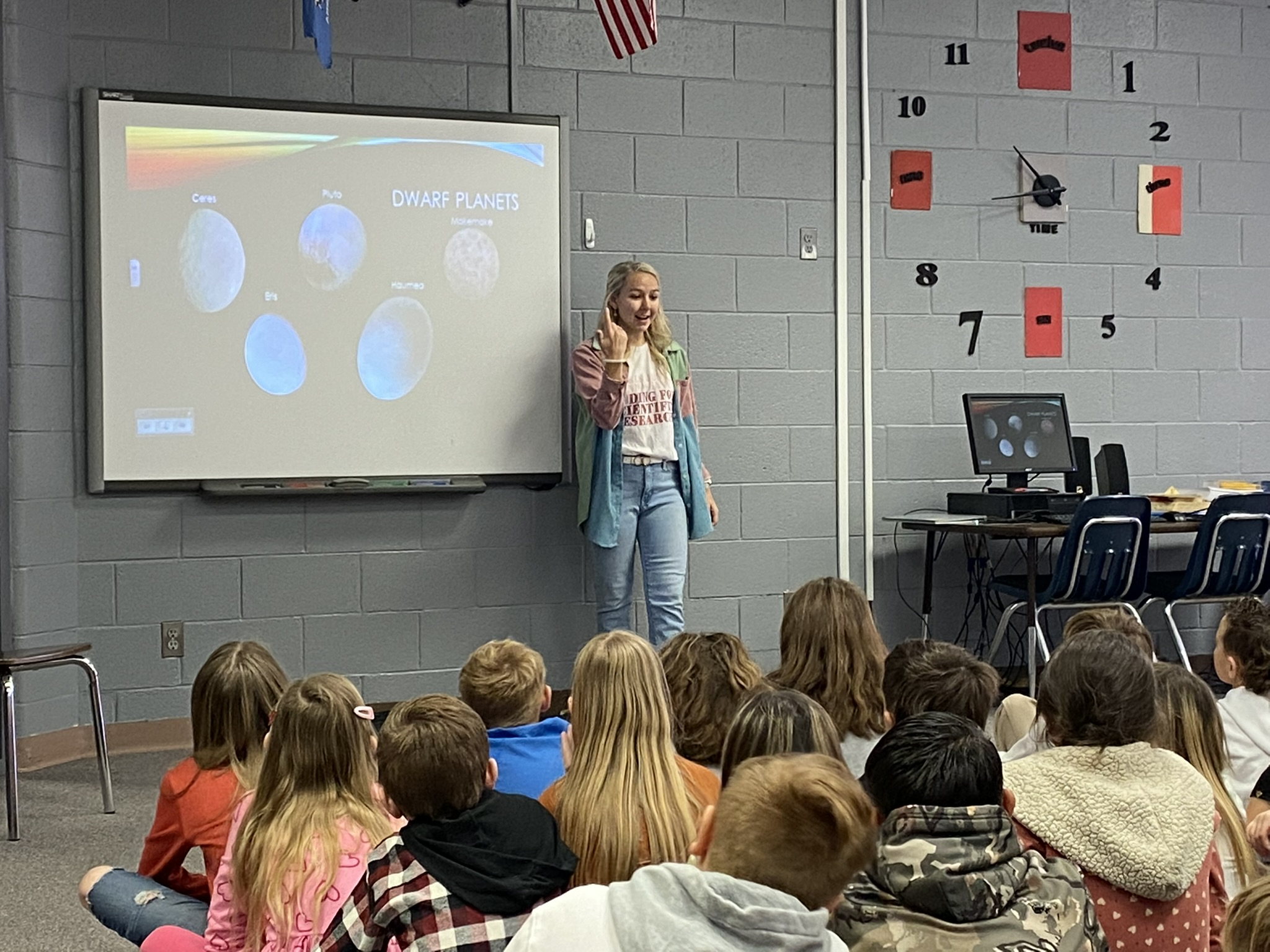
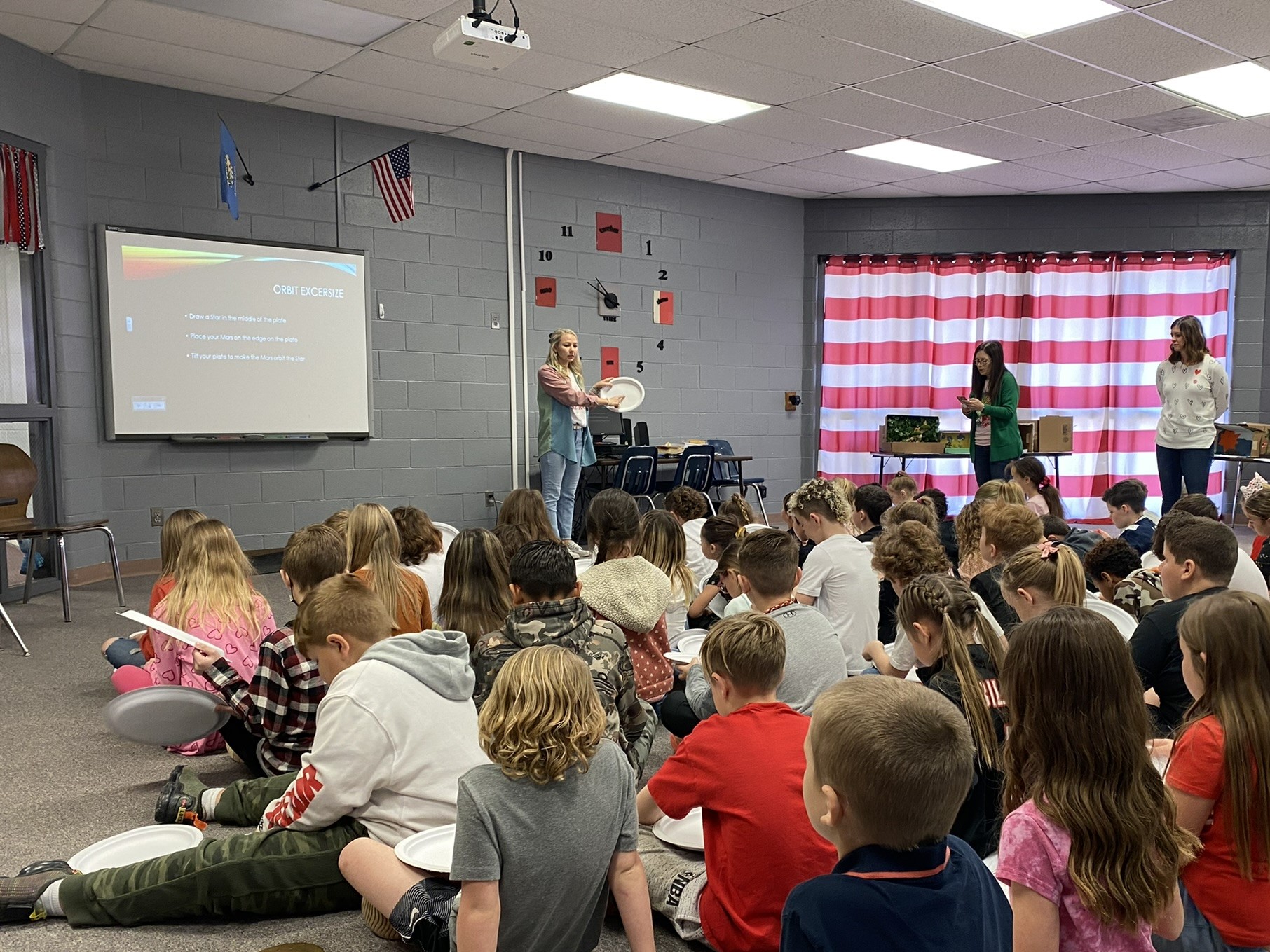
Prague 2014 graduate Racine Cleveland visiting with the Prague Elementary 3rd grade classes last week. She talked to the students about planets in our solar system and how their orbits work. Racine is currently a Space and Planetary Science PhD student at the University of Arkansas. She does research funded by a grant that her science team were awards by NASA. (Submitted by Mrs. Nichole Bailey) - Prague (Oklahoma) Times New Herald February 2022